Al Rizq Advertising: Guiding Cities with Clarity
Cities are growing taller, busier and more connected. Visitors arrive from every corner of the world, and residents move between offices, malls, hospitals, transport hubs and public spaces every day. In this kind of environment, the simplest question, “How do I get there?”, needs a smart answer. That is the idea behind smart city wayfinding, which blends physical signage, digital tools and thoughtful planning so people move confidently through complex spaces. Behind every good result are well-designed wayfinding systems that work for everyone, from first-time visitors to daily commuters. In the UAE, Al Rizq Advertising helps developers and project teams turn that vision into real, working environments.
Why Navigation Shapes the City Experience
People judge a place quickly. If a destination is easy to understand, they feel relaxed and welcome. If it is confusing, they feel stressed before they have even arrived. Clear navigation affects visitor satisfaction, safety, accessibility and even how well a development performs commercially.
Large-scale environments make this challenge more serious. Mixed-use developments, healthcare campuses, shopping centres, airports and cultural districts often include multiple entrances, levels and zones. Without a clear information hierarchy, visitors lose time, staff are constantly asked for directions and emergency routes become harder to follow. Good navigation quietly solves all of this.
What Smart City Wayfinding Really Means
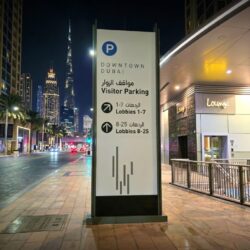
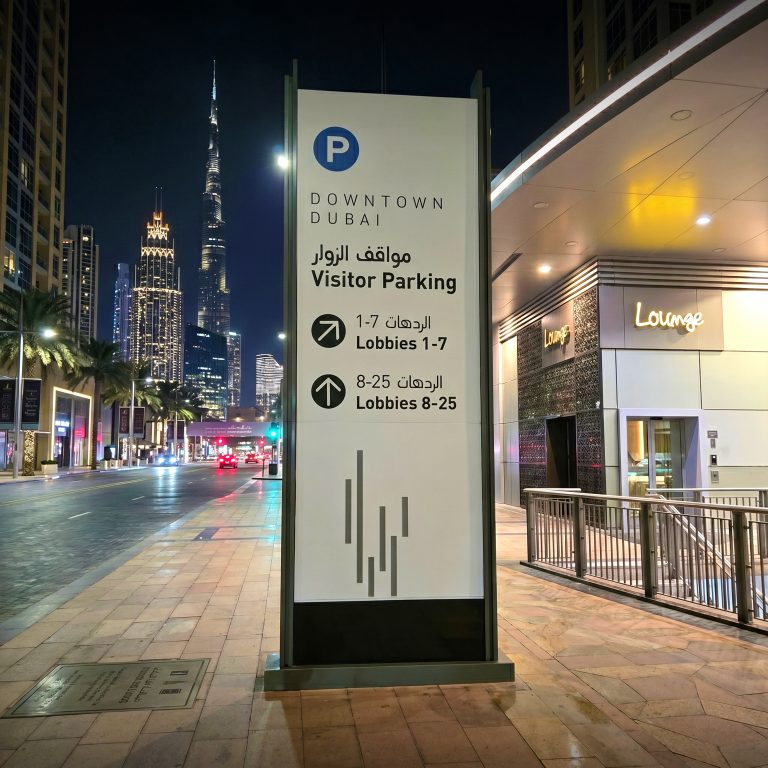
Smart city wayfinding goes beyond placing signs along a street. It treats navigation as a connected experience across a whole district or development. Physical signs, digital maps, interactive directories, kiosks and information displays work together, so the information stays consistent whether you are walking, driving or using public transport.
Several principles define a strong smart approach:
-
Consistency: The same visual language, symbols and naming across every location
-
Layered information: Clear guidance from city entrances to building entrances to individual rooms
-
Accessibility: Tactile and braille elements and designs that are easy to read for people of all abilities
-
Flexibility: Digital components that can be updated quickly as buildings, tenants and routes change
-
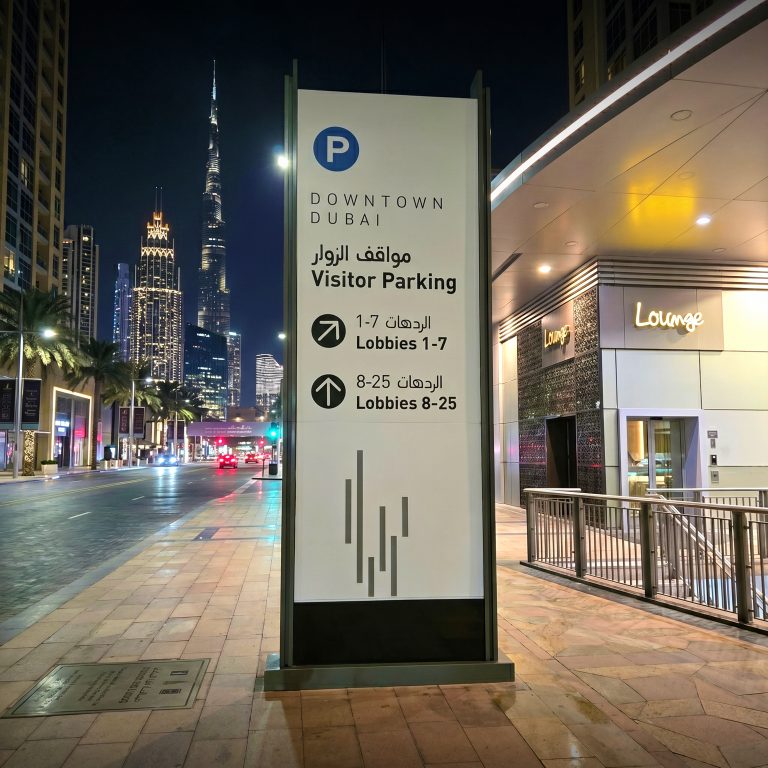
Language support: Clear communication for diverse, international audiences, including both Arabic and English where needed
When these ideas come together, the city feels easier to understand and more welcoming to everyone who uses it.
Wayfinding Systems: From Strategy to Installation
Well-designed wayfinding systems start long before the first sign is made. The process begins with understanding how people arrive, where they need to go, which decisions they face along the way and where confusion is most likely. Only then does the design take shape.
After strategy comes design development, which turns the concept into detailed drawings that consider materials, structure, visibility, lighting and the surrounding architecture. Engineering and fabrication follow, with careful quality checks to make sure every element performs as intended. Finally, installation is carried out in phases and coordinated with other site activities, so the project stays on schedule.
Strong wayfinding systems are never an afterthought. When navigation is planned early, it fits naturally into the architecture rather than being added awkwardly at the end.
Closing the Gap Between Design and Delivery
Many projects struggle at the point where design meets reality. A beautiful concept can become complicated when it meets site conditions, material limits, tight schedules or late changes. That gap is where delays, extra costs and compromised results tend to appear.
As a design and build signage and wayfinding specialist, Al Rizq Advertising focuses on bridging it. The team works alongside developers, architects, contractors and signage consultants to translate approved design intent into reliable, well-engineered solutions. Keeping design development, engineering, fabrication and installation within one coordinated framework reduces miscommunication and improves control over quality and timelines.
Physical and Digital Working as One
Modern developments increasingly combine traditional signage with digital technology. Interactive directories help visitors search for destinations, digital screens share live information and kiosks provide self-service guidance. These tools work best when they match the physical environment, using the same names, colours and logic so the experience feels seamless.
Technology-ready planning also protects your investment. Infrastructure that anticipates future upgrades makes it easier to add new features as technology evolves, without rebuilding everything from scratch. That is particularly valuable for projects that expect to grow or change over time.
Experience Across the UAE
Al Rizq Advertising operates across Dubai and Abu Dhabi, with project experience in mixed-use developments, institutional facilities, healthcare and education campuses, and multi-location commercial rollouts. Its portfolio includes work for well-known destinations and organisations such as One Central, Dubai Safari Park, B1 Mall, Al Shindagha, Etihad Aviation Group and Dubai Municipality.
That breadth of experience matters. Large projects require coordination across many disciplines, and lessons learned in one sector often improve results in another. Working with government, commercial and institutional clients has built a practical understanding of what complex environments really need.
Why Choose Al Rizq Advertising
Choosing a navigation partner is about trust and delivery. Here is what clients can expect:
-
A design and build approach that reduces handover gaps
-
Strong coordination with consultants, architects and contractors
-
Engineering and fabrication aligned with project standards
-
Phased installation planning for busy, live environments
-
Support for both physical and digital navigation elements
-
Experience across a range of sectors and project scales
For developers and asset owners, this means fewer surprises and a final result that matches the original vision.
Planning Tips for Your Project
Involve navigation specialists early, ideally during concept design. Map visitor journeys from arrival to destination and identify decision points. Keep naming, symbols and colours consistent across every area. Consider accessibility from the start rather than adding it later. And plan for future change, because buildings and tenants rarely stay the same forever.
Frequently Asked Questions
1. What is smart city wayfinding?It is a connected approach that combines physical signage, digital tools and planning to guide people through large environments.
2. Which types of projects do you support?Mixed-use developments, healthcare and education campuses, government facilities and commercial rollouts.
3. Do you handle design as well as installation?Yes, design development, engineering, fabrication and installation are delivered within one coordinated framework.
4. Is accessibility considered?Yes, tactile and braille signage are included where accessibility standards require them.
5. Which areas do you serve?Dubai, Abu Dhabi and projects across the UAE.
Conclusion
A city works best when people can move through it without stress. With careful strategy, coordinated delivery and a focus on both physical and digital navigation, Al Rizq Advertising helps developers and organisations create spaces that feel clear, welcoming and easy to use. If you are planning your next project and want dependable wayfinding systems that match your design vision, visit www.rizqgroup.com and share your requirements with the team.