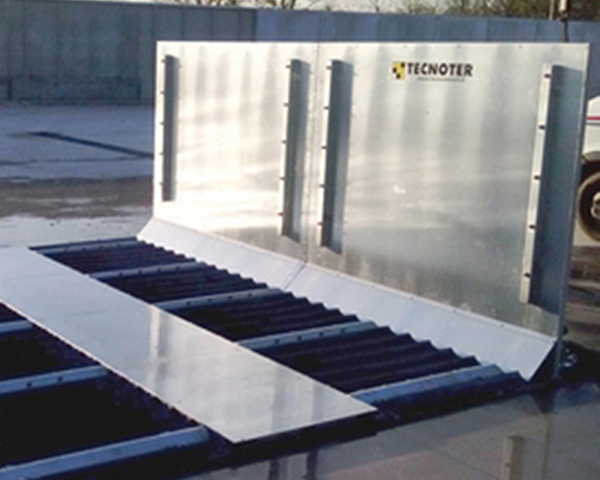
Modular Wash Bases and Portable Wheel Washers: Smarter Solutions for Site Cleanliness
Construction sites, quarries, demolition zones, and other heavy-industry environments face a common, persistent challenge: mud and debris tracked onto public roads by vehicle wheels. Beyond being a nuisance, this issue carries real regulatory, safety, and environmental consequences. That’s where solutions like modular wash bases and a portable wheel washer come into play — offering practical, efficient ways to keep sites compliant and surrounding roads clean.
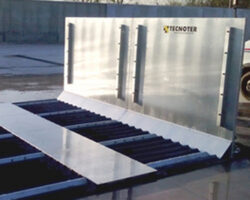
Tecnoter Group has become a recognized name in this space, providing equipment designed specifically to address wheel and vehicle cleaning challenges across construction, waste management, and industrial sectors. In this blog, we’ll explore why wheel washing systems matter, how modular solutions are changing the game, and what makes Tecnoter Group’s approach stand out.
The Problem: Mud, Debris, and Road Contamination
Any site involving heavy vehicle movement — whether it’s a construction project, quarry operation, or landfill — inevitably deals with mud, dirt, and debris clinging to tires and undercarriages. When vehicles exit the site and travel onto public roads, this material gets tracked along the route, creating several problems:
- Road Safety Hazards — Mud and debris on roadways can create slippery conditions, increasing the risk of accidents, particularly for motorcycles and cyclists.
- Environmental Contamination — Sediment and debris can wash into drainage systems, affecting local waterways and violating environmental regulations.
- Regulatory Non-Compliance — Many municipalities and regulatory bodies require sites to implement wheel-washing measures as a condition of their operating permits.
- Public Complaints and Reputational Risk — Dirty roads near a construction site often lead to complaints from residents and businesses, which can affect a company’s reputation and community relations.
Addressing this issue effectively requires equipment that’s not only functional but also practical to install, operate, and maintain across a variety of site conditions.
What Are Modular Wash Bases?
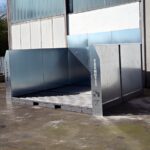
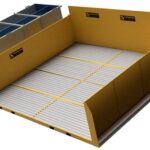
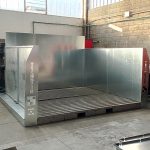
Modular wash bases are engineered systems designed to clean vehicle wheels and undercarriages before they leave a site. Unlike permanent, fixed installations that require extensive civil works, modular systems are built with flexibility in mind. They typically consist of pre-fabricated sections that can be assembled, relocated, or reconfigured based on the specific needs of a project.
Key Advantages of Modular Wash Bases
- Fast Installation — Because components are pre-manufactured, modular wash bases can be set up significantly faster than traditional fixed systems, minimizing project downtime.
- Flexibility Across Projects — As sites open, close, and evolve, modular systems can be disassembled and relocated to new locations, offering long-term value across multiple projects.
- Scalability — Modular designs allow for expansion or adjustment depending on vehicle volume and site layout, making them suitable for both small sites and large-scale operations.
- Reduced Civil Works — Compared to permanently built wash bays, modular systems typically require less excavation and construction, reducing both cost and installation time.
- Water Recycling Capabilities — Many modular systems are designed to integrate water recycling and sediment separation, supporting more sustainable water usage on site.
The Role of a Portable Wheel Washer
While modular wash bases are often used for larger, semi-permanent installations, a portable wheel washer offers an even more flexible solution — ideal for smaller sites, short-term projects, or operations where mobility is a top priority.
Why Choose a Portable Wheel Washer?
- Mobility — Portable units can be moved easily between locations, making them ideal for companies managing multiple smaller sites or projects with shorter durations.
- Quick Deployment — With minimal setup required, portable wheel washers can be operational within a short timeframe, allowing sites to meet compliance requirements without delay.
- Cost-Effective for Smaller Operations — For projects that don’t require a large-scale fixed system, a portable unit offers an efficient, budget-friendly alternative.
- Versatility — Portable washers can be used across various site types, from road construction projects to temporary demolition sites, adapting easily to different operational needs.
- Compact Footprint — These units are designed to take up minimal space while still delivering effective wheel-cleaning performance.
What to Look for When Choosing Wheel Washing Equipment
Selecting the right system depends on several site-specific factors. Here’s what businesses should consider:
Vehicle Volume and Size
Higher traffic sites with larger vehicles may benefit from more robust modular wash bases, while smaller sites with lighter vehicle traffic might find a portable wheel washer sufficient.
Site Duration
For long-term projects, a modular system offers durability and scalability. For short-term or temporary operations, portability becomes the priority.
Water Management Needs
Look for systems that incorporate water recycling and sediment filtration, reducing water waste and supporting environmental compliance.
Ease of Maintenance
Equipment that’s straightforward to clean, maintain, and service will minimize downtime and keep operations running smoothly.
Regulatory Requirements
Ensure the chosen system meets local environmental and safety regulations relevant to your industry and location.
How Tecnoter Group Delivers Reliable Solutions
Tecnoter Group specializes in providing effective, well-engineered wheel-cleaning solutions tailored to the realities of construction, quarrying, and industrial site management. Their offerings reflect a deep understanding of the operational challenges faced by site managers:
- Durable Construction — Equipment built to withstand demanding site conditions, heavy vehicle traffic, and continuous daily use.
- Efficient Cleaning Performance — Systems designed to thoroughly clean wheels and undercarriages, minimizing debris carryover onto public roads.
- Adaptable Designs — Both modular wash bases and portable wheel washer options are available, allowing businesses to choose the configuration that best fits their project needs.
- Sustainability Focus — Water recycling and sediment management features support more responsible resource use on site.
- Support and Expertise — Guidance from an experienced team helps businesses select and implement the right system for their specific operational requirements.
Final Thoughts
Keeping construction and industrial sites compliant, safe, and environmentally responsible starts with addressing one often-overlooked issue: mud and debris tracked onto public roads. Whether a project calls for the scalability of modular wash bases or the flexibility of a portable wheel washer, having the right equipment in place makes a measurable difference in operational efficiency and regulatory compliance.
To learn more about wheel washing solutions designed for real-world site conditions, visit Tecnoter Group.
Frequently Asked Questions
1. What’s the difference between a modular wash base and a portable wheel washer? Modular wash bases are typically larger, semi-permanent systems built from pre-fabricated sections, suited for higher traffic sites. Portable wheel washers are smaller, fully mobile units designed for quick deployment and easy relocation between sites.
2. How quickly can a modular wash base be installed? Because components are pre-manufactured, installation is generally much faster than traditional fixed wash bays, though exact timelines depend on site conditions and system size.
3. Do these systems recycle water? Many modular and portable wheel washing systems include water recycling and sediment separation features, helping reduce water consumption and support environmental compliance.
4. Are portable wheel washers suitable for large construction sites? While portable units are ideal for smaller or short-term projects, larger sites with heavy vehicle traffic often benefit more from the scalability of a modular wash base system.
5. Is wheel washing equipment required by law on construction sites? Many municipalities and regulatory bodies require wheel-washing measures as part of site operating permits, particularly to prevent road contamination and environmental runoff. Requirements vary by location.
6. Can wheel washing systems be relocated between projects? Yes, both modular wash bases and portable wheel washers are designed with flexibility in mind, allowing them to be disassembled or moved as project needs change.
























![350-501 Dumps [DUMPSARENA] Exam Success Formula](https://buyerseller.xyz/btabcloud/uploads/2025/02/dumps-1740377522l8p4c-250x131.jpg)