Beyond the Rhythm: How to Master the Art of the Geometry Jump
There is a precise moment in rhythm-based platformers when frustration transforms into pure, unadulterated flow. You are moving at breakneck speed, the beat is driving your pulse, and a wall of neon spikes looms directly ahead. You do not have time to think; your muscle memory takes the wheel, your finger taps the screen or spacebar, and your avatar vaults gracefully over the obstacle, landing in perfect time with the music.
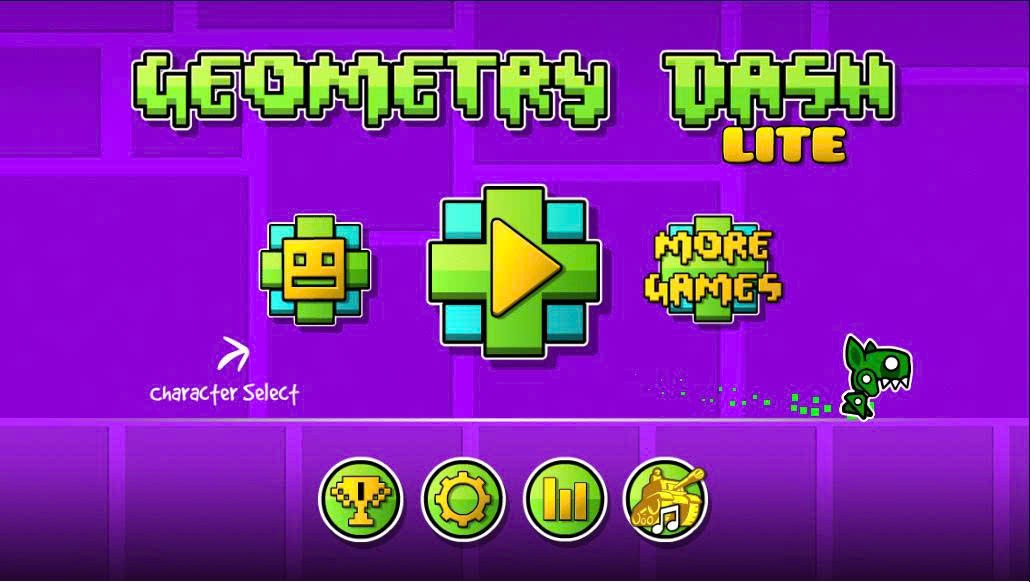
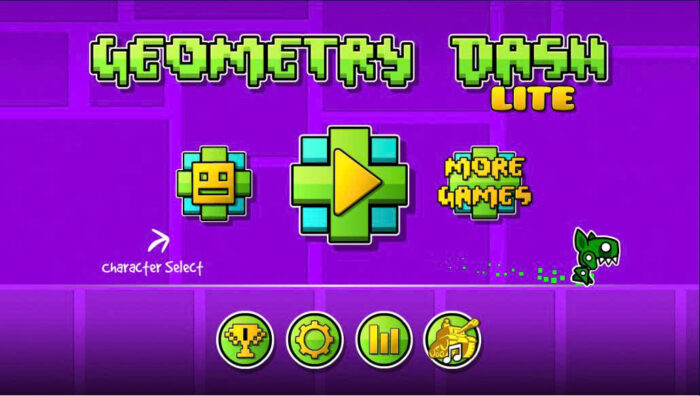
This is the essence of the “geometry jump”—a distinct gameplay mechanic that turns simple spatial timing into a thrilling, high-speed dance. While many games feature jump mechanics, few have refined it into a standalone art form quite like Geometry Dash. Whether you are a casual gamer looking for a quick thrill or a enthusiast seeking the ultimate reflex test, learning how to truly experience and play a geometry jump game offers a uniquely rewarding journey.
The Anatomy of the Jump: Simple Mechanics, Infinite Complexity
At first glance, a geometry jump seems deceptively simple. Unlike traditional platformers where you control movement speed, directional momentum, and multi-button actions, geometry jump games strip controls down to the absolute bare minimum: a single button or tap.
Your character moves forward automatically at a fixed or dynamic speed. Your sole responsibility is timing the jump. However, what makes this mechanic fascinating—especially in Geometry Dash—is how the environment reacts to that single input. A single tap might propel a simple square over a triangular spike, but hit a jump ring mid-air, and you instantly launch higher. Enter a portal, and your icon transforms into a rocket ship, a gravity-flipping ball, or a wave that zig-zags diagonally through razor-thin corridors.
The genius of this design lies in its predictability. There is no random generation or artificial intelligence driving the hazards. Every spike, block, and portal is placed with mathematical precision. When you fail, it is never because the game cheated; it is because your timing was off by a fraction of a millisecond. This absolute fairness creates a powerful loop: instant feedback, instant restart, and a continuous desire to try just one more time.
How to Experience the Flow State
To truly enjoy a geometry jump game, you have to approach it with the right mindset. If you play merely to beat a level as quickly as possible, you will likely run straight into a wall of irritation. Instead, treat it as a music and rhythm experience.
Listen Before You Leap: The soundtrack in these games is not just background noise; it is your map. Level designers synchronize obstacle placements with audio cues, drum beats, and musical drops. If a jump feels impossibly tight, listen closely to the rhythm—often, the audio tells you exactly when to press.
Embrace the Sight-Read: Your first few attempts at any new level are exploratory. Do not expect to clear complex sections immediately. Treat early runs as a visual reconnaissance mission to learn the layout, identify portal transitions, and spot hidden jump pads.
Utilize Practice Modes: Most geometry platformers offer a dedicated practice mode allowing you to place checkpoints. Breaking a chaotic 90-second level down into manageable 5-second chunks renders seemingly impossible maneuvers completely approachable.
Actionable Tips for Better Control and Focus
If you want to push past the early levels and tackle tougher challenges, refine your technique with these core practices:
Optimize Your Setup: Hardware lag is your worst enemy in high-speed timing games. Ensure your display refresh rate is optimal, use a wired mouse or keyboard if playing on PC, and close background applications that might cause micro-stuttering.
Keep Your Eyes Ahead: Beginners often focus directly on their character. As speed increases, train your vision to rest slightly ahead of your icon. Anticipating upcoming hazards half a second early gives your brain the extra time needed to process complex tap sequences.
Maintain Light Physical Contact: Avoid slamming your keys or screen. Tense muscles slow down your reaction speed. Keep your hands relaxed and use short, light taps. This minimizes physical fatigue during long practice sessions.
Take Breaks to Retain Muscle Memory: Your brain processes spatial patterns and muscle memory while resting. If you find yourself repeatedly failing an easy jump due to frustration, step away for twenty minutes. You will often clear the obstacle on your very first try when you return.
Finding Joy in the Progression
Playing a geometry jump game is ultimately a journey of self-improvement. There are no level-ups, gear upgrades, or stat boosts to bail you out; the only thing that improves is your own skill and focus. Crossing the finish line of a level that once felt humanly impossible delivers a genuine sense of accomplishment that few other genres can match.
So turn up the volume, stay light on your fingers, and step into the rhythm. Once you hit that perfect stride where sight, sound, and touch align, you will realize that a simple jump is far more than just dodging a spike—it is pure interactive harmony.